
Help and support the creative community
Why Every Business Needs a Website Before Running Facebook and Google Ads


Facebook and Google Ads Need a Destination
Ads are not the final step. They are the starting point.
When someone clicks your ad, one of three things must happen immediately:
They understand what you offer
They trust your business
They know what action to take next
A well-structured website or landing page does exactly this.
Sending traffic to:
A WhatsApp number
A Facebook Page
A random social post
…dramatically reduces conversion rates.
A website provides:
Clear messaging
Structured information
Professional design
Strong calls-to-action
Ads without a website are like inviting people to a shop with no entrance.
Trust Is Everything in Online Marketing
People do not buy from businesses they do not trust.
Before making a decision, users subconsciously ask:
Is this business real?
Are they professional?
Can I trust them with my money?
A professional website answers these questions instantly.
Trust elements your website should include:
About Us page
Contact details
Privacy Policy
Terms & Conditions
Clear services or product descriptions
Testimonials or social proof
Facebook and Google evaluate trust as well. Websites with poor structure or missing legal pages often:
Get ads rejected
Pay higher ad costs
Struggle with account approvals
Websites Improve Ad Performance and Lower Costs
Many businesses don’t realize this, but your website directly affects how much you pay for ads.
Google Ads:
Google assigns a Quality Score to your ads based on:
Landing page relevance
Page speed
User experience
Content quality
Better websites = higher Quality Score = lower cost per click.
Facebook Ads:
Facebook measures:
User engagement
Bounce rate
Time spent on page
If users click your ad and leave immediately because your website is poor, Facebook increases your costs.
A good website:
Keeps users engaged
Improves relevance scores
Reduces ad spend
Increases ROI
Websites Improve Ad Performance and Lower Costs
Many businesses don’t realize this, but your website directly affects how much you pay for ads.
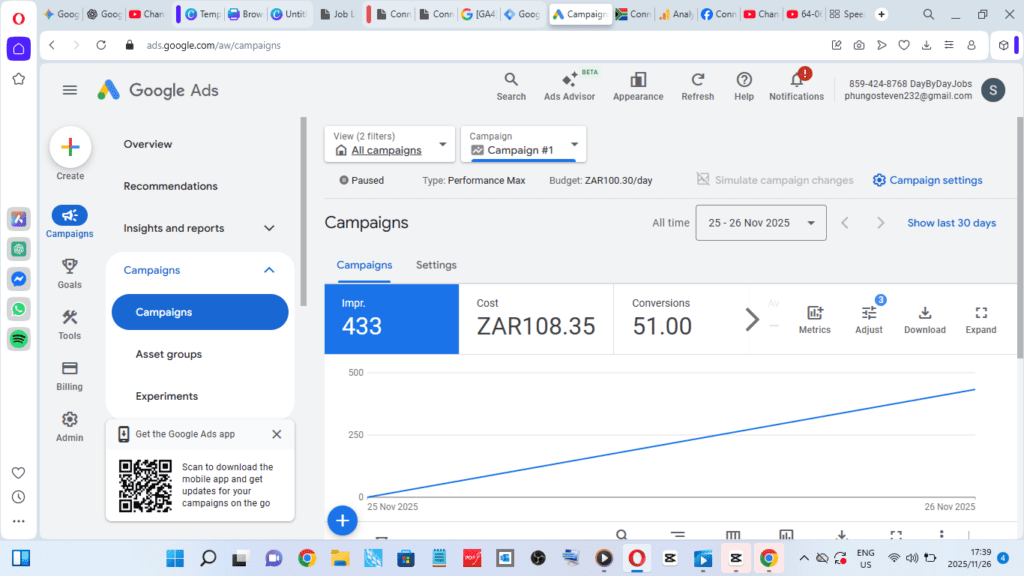
Google Ads:
Google assigns a Quality Score to your ads based on:
Landing page relevance
Page speed
User experience
Content quality
Better websites = higher Quality Score = lower cost per click.
Facebook Ads:
Facebook measures:
User engagement
Bounce rate
Time spent on page
If users click your ad and leave immediately because your website is poor, Facebook increases your costs.
A good website:
Keeps users engaged
Improves relevance scores
Reduces ad spend
Increases ROI

A Website Turns Traffic into Leads and Sales
Traffic alone means nothing.
What matters is conversion.
Your website allows you to:
Collect email addresses
Book consultations
Sell products
Offer downloads
Promote courses
Build funnels
Without a website, you cannot:
Track conversions properly
Optimize campaigns
Build remarketing audiences
Ads bring people in. Your website turns them into customers.
Data, Tracking, and Optimization
Digital marketing is driven by data.
A website allows you to install:
Google Analytics
Google Tag Manager
Facebook Pixel
Conversion tracking
This data helps you:
See which ads work
Understand user behavior
Improve weak pages
Scale winning campaigns
Without a website, you are advertising blind.
Retargeting: Where the Real Money Is
Most people do not buy on the first visit.
A website allows you to:
Retarget visitors with Facebook Ads
Run Google Display remarketing
Show ads to people who already know you
Retargeting ads are:
Cheaper
More effective
Higher converting
No website = no retargeting strategy.
A Website Supports Long-Term Growth
Ads stop the moment you stop paying.
A website supports:
SEO (free organic traffic)
Content marketing
Blogging
Email marketing
This creates long-term, compounding growth.
Businesses with websites don’t rely only on ads—they build digital assets.
Websites Build Authority and Brand Identity
Your website tells your story.
It positions you as:
An expert
A professional
A trusted brand
When users see ads and then visit a strong website, confidence increases.
Confidence leads to conversions.

Common Mistakes Businesses Make
Running ads without a website
Sending traffic to social media pages
Using slow or poorly designed sites
No clear call-to-action
No tracking installed
These mistakes cost businesses thousands.
What Makes a Website Ad-Ready?
Fast loading speed
Mobile-friendly design
Clear headline and offer
Simple navigation
Strong call-to-action
Legal pages (Privacy Policy, Terms)
This is not optional—it is essential.
Website + Facebook Ads + Google Ads = Growth System
The most successful businesses use a system, not isolated tactics.
That system looks like this:
Website as the foundation
Facebook & Instagram Ads for demand creation
Google Ads for high-intent traffic
Retargeting to close sales
This is how scalable digital growth is built.

Final Thoughts
Running Facebook and Google Ads without a website is like pouring water into a broken bucket.
A website:
Builds trust
Improves ad performance
Lowers costs
Increases conversions
Enables long-term growth
If you are serious about digital marketing, start with a professional website first.